EB-5 Visa copyright Guide
For many international investors, the United States serves as a realm of endless possibilities, a place to build a future, and a stable environment for their families. However, the path to permanent residency can often feel like maneuvering through a challenging landscape. This is where the EB-5 Immigrant Investor Program enters the picture, serving as a trusted guide for those aiming to make a meaningful investment in the U.S. economy in exchange for the prestigious copyright. For investors investigating your options for U.S. immigration, this complete overview is structured to answer your questions and clarify the path forward. We will examine the specifics of the program, from the first steps to the final steps of securing permanent residency, using the framework provided by U.S. Citizenship and Immigration Services (USCIS) to give you the most current and trustworthy information at your fingertips.
Essential Takeaways
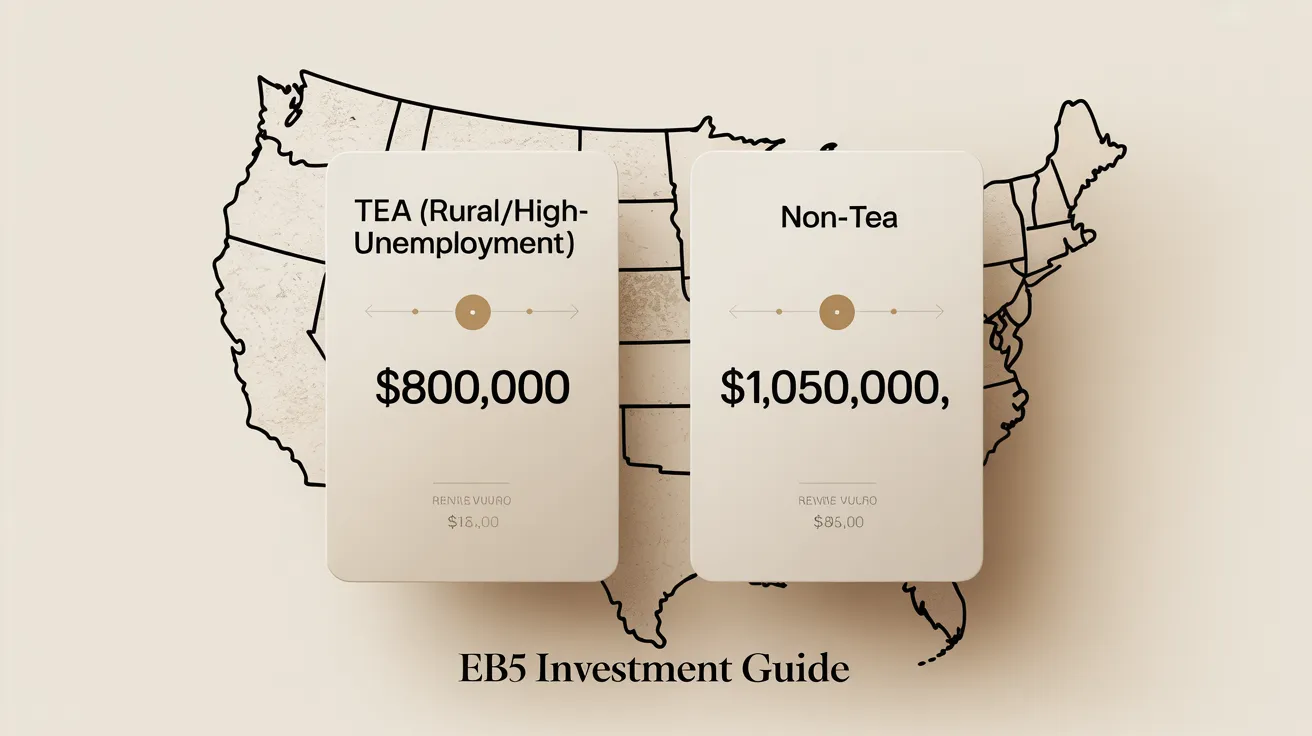
- The EB-5 visa program offers a reliable route to obtaining a U.S. copyright through investment, necessitating a financial investment of $800,000 in a Targeted Employment Area (TEA) or $1,050,000 elsewhere.
- The process involves completing Form I-526/I-526E, obtaining a two-year Conditional copyright, and subsequently submitting Form I-829 to remove conditions.
- Investment seekers have the opportunity to opt for either a hands-off investment approach through a Regional Center or a active personal investment method.
- Thorough documentation of the proper financial documentation is a critical requirement that can significantly impact petition success.
- Individuals applying from high-volume nations may face processing delays and need to track the Visa Bulletin for movement in priority dates.
- This opportunity grants permanent residency for the investor and their family members, with an option to U.S. citizenship after 5 years of residency.
The Complete Guide to the Investment-Based EB-5 Visa
This EB-5 copyright by investment goes beyond being just a visa; it is an entryway to a new beginning in the United States. Overseen by USCIS, this initiative was established to stimulate the U.S. economy through investment and employment generation by foreign investors. In return for their contribution, investors, together with their spouses and unmarried children under 21, can obtain a copyright, offering them the opportunity to work, live, and study anywhere in the country. This pathway stands as one of the most trustworthy routes to permanent residency, as it does not require sponsorship from an employer or a family member, providing a level of independence that is particularly appealing to global entrepreneurs and investors.
The EB-5 investment program represents clear evidence of America's dedication to foreign investment driving economic growth. Unlike other immigration pathways that rely on family relationships or employer sponsorship, the EB-5 program allows investors to take control of their immigration destiny through strategic investment placement. This independent approach attracts successful business professionals and entrepreneurs who prefer to rely on their own capital resources rather than outside sponsorship.
The Essential Guide to EB-5 Investment Capital
At the foundation of the EB-5 program exists the investment itself. The mandatory capital contribution isn't a standardized amount; it varies based on the geographical area of the project where you place your capital. Grasping these financial requirements is the primary and essential step in your EB-5 path. USCIS has set two different investment levels that reflect the economic development objectives of the United States federal government.
Examining the Dual Thresholds: $800,000 and $1,050,000
An investor must contribute at least $800,000 if the investment is made in ventures located within a Targeted Employment Area (TEA). Alternatively, the investment requirement rises to $1,050,000 for projects situated outside of these specified zones. The investment thresholds are purposeful; they are specifically designed to guide capital into regions requiring development, and the variance is substantial enough to make the project location a key decision factor.
The investment thresholds were established with specific purpose to guide foreign capital to economically disadvantaged regions. The $250,000 disparity between TEA and non-TEA investments represents a considerable incentive that can impact project decisions and general investment approach. Investors need to thoroughly assess not only the financial implications but also the sustained feasibility and job creation potential of projects in diverse regional zones.
The Critical Role of Location: Navigating Targeted Employment Areas (TEA)
Understanding a Targeted Employment Area (TEA) serves as a fundamental component of the EB-5 program. The program recognizes a TEA as either a rural area or a region experiencing high unemployment, namely areas with unemployment rates of at least 150% of the national average. The decreased investment threshold of $800,000 for projects within TEAs acts as a strong inducement aimed at channel foreign capital into communities that have the greatest need for economic development and job creation.
When investors consider a TEA-based project, it goes beyond reducing the initial investment requirement; these projects can additionally offer opportunities for quicker application handling and robust possibilities for meeting the program's strict job-creation standards. Choosing a project within a TEA can consequently serve as a critical decision that influences the entire trajectory of your EB-5 visa copyright application. Because TEA designations are carefully monitored and regularly modified, it's vital for investors to verify present designation before finalizing any project.
The First Step to Your American Dream: Filing Form I-526/I-526E
Once you've selected your investment opportunity, the formal procedure for pursuing your EB-5 visa starts with filing Form I-526, or Form I-526E for Regional Center investors. This petition to USCIS must thoroughly demonstrate that your investment meets all program requirements. This includes not only investing the mandatory investment funds but also providing a thorough blueprint demonstrating how the investment will generate a minimum of 10 full-time jobs for American workers.
The I-526/I-526E application serves as the basis of your full EB-5 petition. Every subsequent step in the process is contingent on the thoroughness and quality of this initial filing. The application must deliver a compelling business case that establishes not only conformity to program requirements but also the viability and sustainability of the planned job creation. USCIS adjudicators scrutinize these applications with substantial attention to detail, making thorough preparation critically important.
Demonstrating Legitimacy: Source of Funds Documentation
A critical component of the I-526/I-526E petition is the documentation of the legitimate source of your investment funds. USCIS emphasizes significant importance on this part of the application, and you must furnish a comprehensive and traceable record of the origin of your capital. This entails providing detailed financial evidence, including bank statements, tax returns, and documentation of property sales or other transactions, to build a transparent and unbroken chain of documentation that your funds were sourced through proper means.
The completeness of your source of funds documentation plays a crucial role in the outcome of your application. USCIS requires comprehensive documentation of funds from their original source through all transfers leading to the EB-5 investment. This documentation must account for foreign exchange transactions, transitional transfers, and all borrowing or gifting used in putting together the investment funds. The intricacy of this process typically requires collaborating with experienced professionals who comprehend the precise documentation requirements required by USCIS.
The Investor's Pathway: Selecting On a Regional Center and Direct Investment
The established EB-5 immigrant investor program provides two different routes for investors: making an investment via a USCIS-approved Regional Center or pursuing a direct investment into a new commercial enterprise. Selecting between these options will depend on your individual objectives, your preferred participation level, and your comfort with risk. Each route presents specific pros and cons that must be carefully evaluated in the context of your particular situation and aims.
A Regional Center serves as an economic entity, public or private, that works toward advancing economic expansion. Regional Centers are widely favored as they allow more hands-off investment opportunities, pooling funds from various investors and managing the investments for them. Additionally, they offer more adaptable job creation requirements, permitting the inclusion of indirect and induced jobs in addition to direct employment. This broader job creation methodology can help investors satisfy the program's employment criteria.
Direct investing, conversely, necessitates a higher degree of participation, where the investor is actively involved in managing the enterprise. This pathway provides more oversight but also calls for a increased amount of operational responsibility. Direct investments have to prove job creation through direct employment only, which can be harder to achieve but also easier to verify and validate. The selection between these options should match your investment strategy, available time for involvement, and comfort level with various investment risks.
Understanding Your Two-Year Conditional copyright Journey
Upon approval of your Form I-526/I-526E petition and once a visa opens up according to the Visa Bulletin, you and your eligible family members will be granted a Conditional copyright, valid for two years. This is a significant milestone, enabling you to establish residence in the U.S. and commence your new life. However, as the name implies, this status is conditional and carries specific requirements that need to be met to preserve your legal status.
During this two-year timeframe, your investment funds must remain fully invested and at risk in the project, and the investment must continue in the direction of meeting the job creation requirements. This phase serves as a provisional stage, where you must prove your ongoing commitment to the requirements of the EB-5 program. The provisional status of this position means that not meeting program requirements can result in the forfeiture of your copyright and potential removal from the United States.
Living as a conditional resident grants the majority of advantages of permanent residency, including the opportunity to travel, work, and utilize certain government services. Nevertheless, the conditional status establishes continuing regulatory requirements that demand careful monitoring and documentation. Investors must maintain detailed records of their investment's performance, employment generation status, and adherence to residency guidelines during the conditional term.
Securing Your Future: The Path to Removing Conditions with Form I-829
To transition from a conditional resident to a lawful copyright, you are required to file Form I-829, the application to remove conditions on permanent residency. This form needs to be filed in the 90-day period before the two-year anniversary of your admission to the U.S. as a conditional resident. The I-829 petition is the final step in demonstrating that you have fulfilled all the criteria of the EB-5 program.
You are required to submit documentation that your investment was maintained throughout the two-year conditional period and that the required 10 full-time jobs for U.S. workers were generated or sustained as a result of your investment. Upon approval of your I-829 petition, the provisional status on your copyright will be lifted, and you will receive full permanent residency. This signifies the completion of your EB-5 journey and the fulfillment of your objective of gaining permanent U.S. residency through investment.
The I-829 application requires extensive paperwork demonstrating conformity to every program requirement throughout the conditional residency. This includes financial documentation demonstrating maintained investment, employment records confirming job generation, and evidence of the investor's ongoing participation in the business. The comprehensiveness and precision of this documentation directly influences the probability of petition success and the favorable lifting of temporary status.
The Art of Patience: Navigating Backlogs, Priority Dates, and the Visa Bulletin
For individuals from countries heavily pursuing EB-5 visas, including China, India, and Vietnam, the path to acquiring an investment copyright USA can entail a considerable waiting period. This is due to the annual per-country visa limits determined by the U.S. Congress, which restrict the number of visas that can be issued to nationals of any single country at 7% of the total annual allotment for each visa category.
When you submit your I-526 petition, you are assigned a "Priority Date," which effectively marks your spot in the queue. The Visa Bulletin, published every month by the U.S. Department of State, presents data on visa availability and records the flow of priority dates for respective region. You will need to monitor the Visa Bulletin to follow the advancement of priority dates and to know when a visa will become accessible for you.
As the old saying goes, "patience is a virtue," and this rings especially true for EB-5 investors from oversubscribed countries. It is vital to incorporate these potential waiting times into your future strategy and to recognize that the immigration process may take several years from beginning to end. An experienced EB-5 visa attorney can deliver crucial support in handling these intricacies and implementing strategies to navigate the waiting period efficiently.
Unlocking a World of Opportunity: The Advantages and Benefits of the EB-5 Program
Notwithstanding the thorough qualifications and likely waiting periods, the EB-5 program presents abundant perks that establish it as a highly sought-after immigration option. The primary perk is the opportunity for the investor, their spouse, and their unmarried children under 21 to secure permanent residency in the United States. This creates a world of options, including the freedom to reside, work, and pursue education throughout in the country without needing a sponsor.
The EB-5 visa provides unmatched versatility compared to other immigration pathways. In contrast to employment-based visas that bind you to a specific employer or location, the EB-5 copyright provides complete geographic and professional freedom. You have the ability to launch a venture, transition careers, or pursue education without immigration limitations. This liberty is especially valuable for business owners and professionals who value freedom and adaptability in their career paths.
Furthermore, after holding permanent residency for five years, EB-5 investors and their family members can become eligible to seek U.S. citizenship, completing their journey from investor to American citizen. The route to citizenship through EB-5 is uncomplicated, requiring only the continuation of copyright status and compliance with standard naturalization requirements. This marks the final realization of the American dream for many international investors and their families.
Questions and Answers
What you need to know about the EB-5 copyright process?
The EB-5 immigration process is a multi-step journey for international investors to secure copyright status in the United States. The process starts with identifying a qualifying investment project, via direct investment or Regional Center sponsorship. Investors must submit Form I-526 or I-526E petition with USCIS, submitting comprehensive evidence of their investment and their funds' legitimate origin. Upon approval and visa availability, the applicant and qualifying family members obtain a Conditional copyright valid for two years. In this timeframe, investors must maintain their investment and produce at least 10 U.S. jobs. In the final step, investors submit Form I-829 to obtain unconditional permanent residency and secure copyright status.
What's the minimum investment required for EB-5?
The minimum investment requirement for the EB-5 program stands at $800,000 for projects located in a Targeted Employment Area (TEA). A TEA is defined as either a high-unemployment region or rural territory. For developments not within a TEA, the minimum investment requirement reaches $1,050,000. These amounts are set by USCIS and are an essential consideration in how investors make their decisions. The investment has to be maintained at risk for the duration of the conditional residency period and has to come from lawful means with comprehensive documentation.
How do we define a TEA?
A TEA designation refers to a geographic area recognized by USCIS that qualifies as either a rural area or a location with jobless rates at at least 150% of the national average. The main objective of this designation is to stimulate investment in areas of the country that are most in need. Supporting a TEA-based project enables an investor to qualify for the lower investment amount of $800,000. TEA designations are based on specific economic and geographic requirements and are updated on a regular basis to incorporate changing economic conditions.
How do Regional Center and direct investments differ?
An EB-5 investor can choose between two investment models: either Regional Center programs or direct investment opportunities. A Regional Center operates as an authorized organization that oversees investment projects and aggregates investments from multiple applicants. This approach offers a hands-off investment strategy, as the Regional Center manages the day-to-day management and job creation requirements. Regional Centers can count indirect and induced jobs toward the employment requirement. A direct investment involves greater personal involvement where the investor is actively involved in the business operations. This option provides greater authority while demanding more operational responsibility from the investor and can only count direct jobs toward the employment requirement.
What is a Conditional copyright?
A two-year Conditional copyright functions as a temporary, two-year residency permit issued to EB-5 investors when their I-526 petition is approved and visa numbers become available. This permission permits the investor and qualifying family members to live and work in the U.S. However, the status remains conditional upon the investor satisfying all EB-5 program requirements, including preserving their investment and creating the mandated number of jobs. To transition to permanent residency, the investor must submit Form I-829 before the conditional period ends. Missing the filing deadline or more info meet program requirements may lead to loss of status and removal from the United States.